Project T
Overview
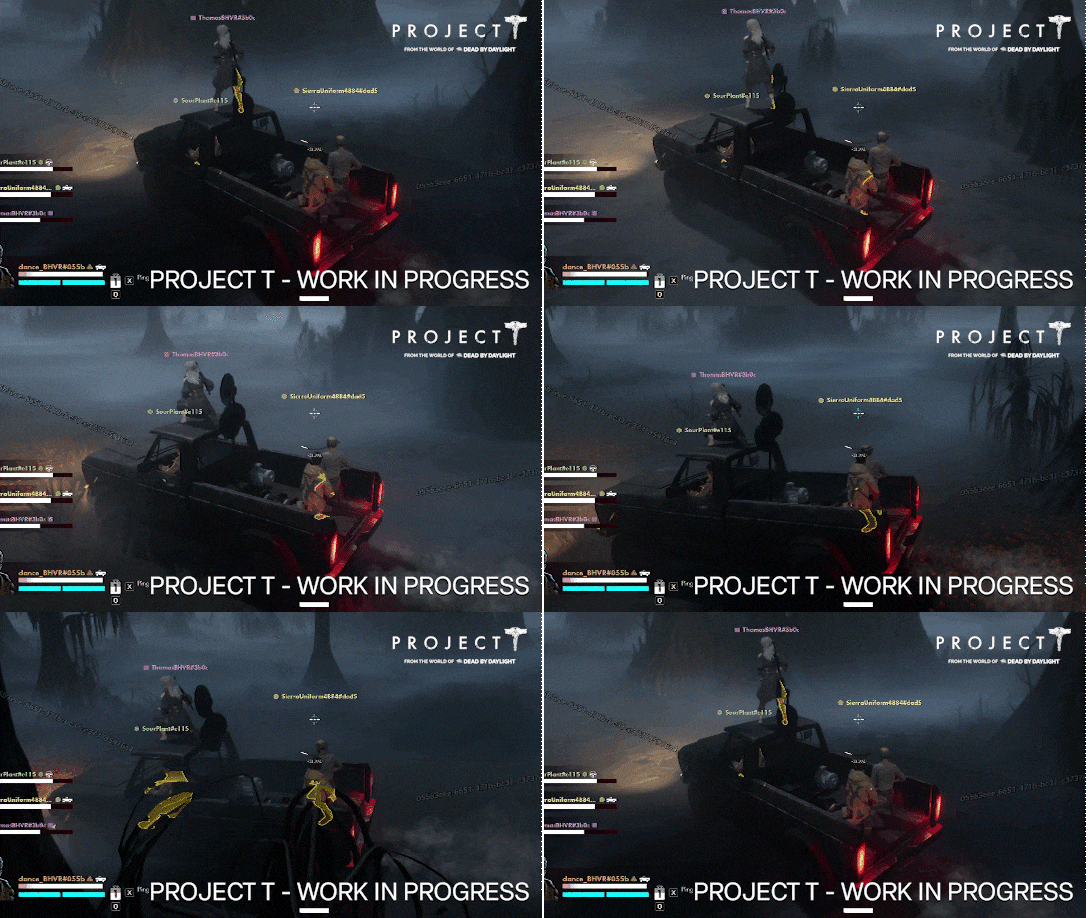
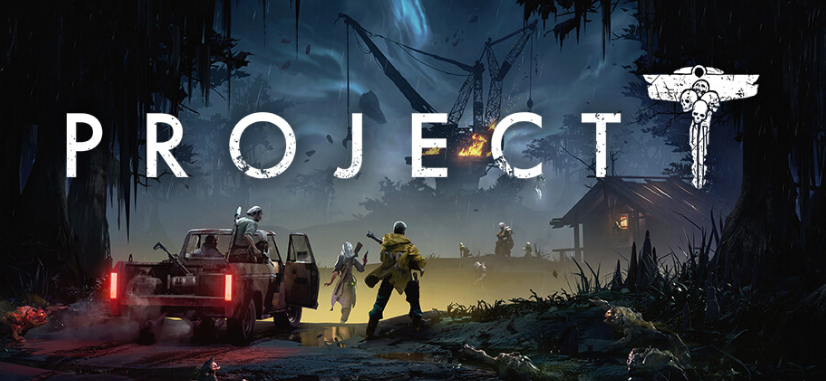
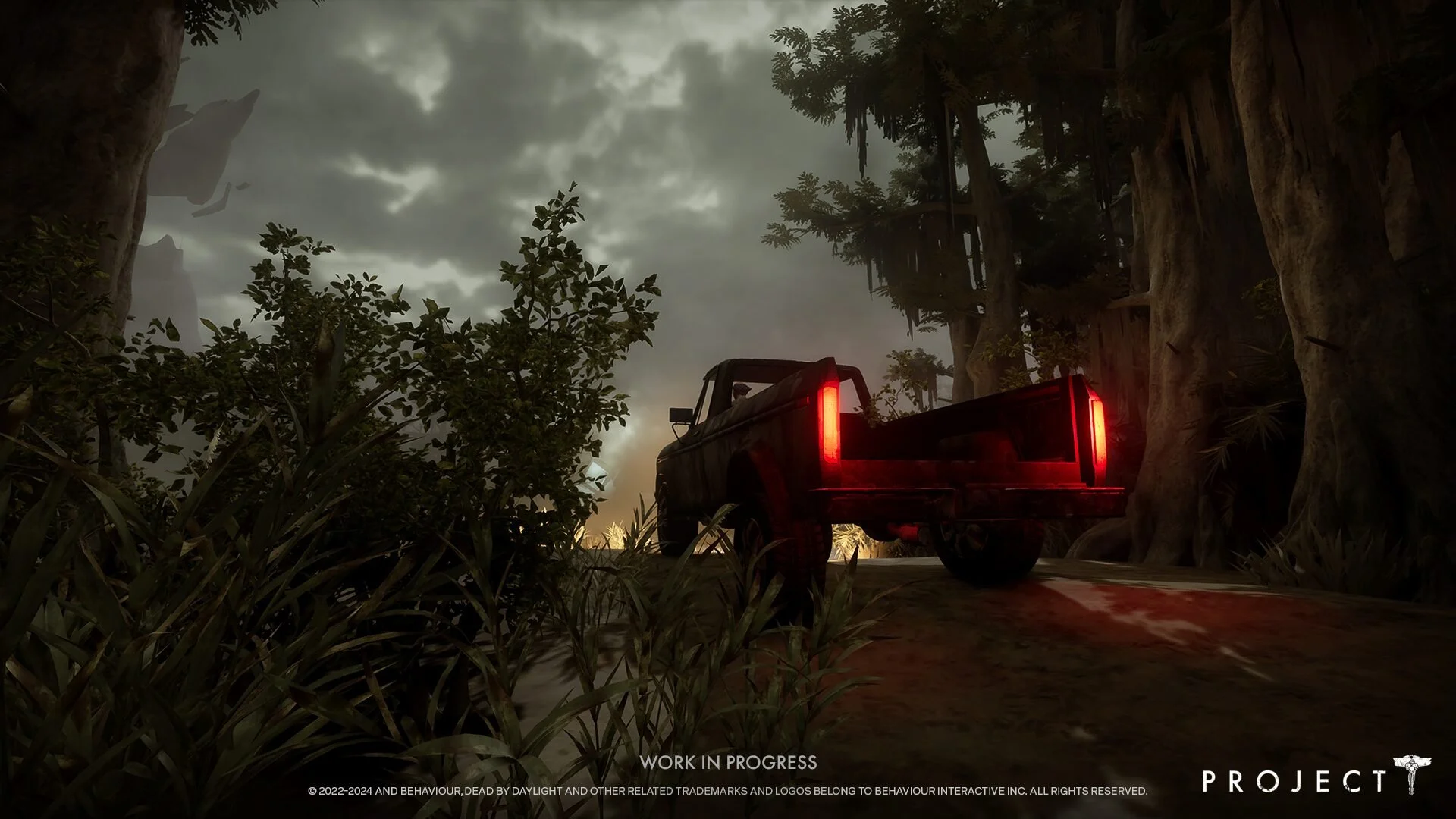
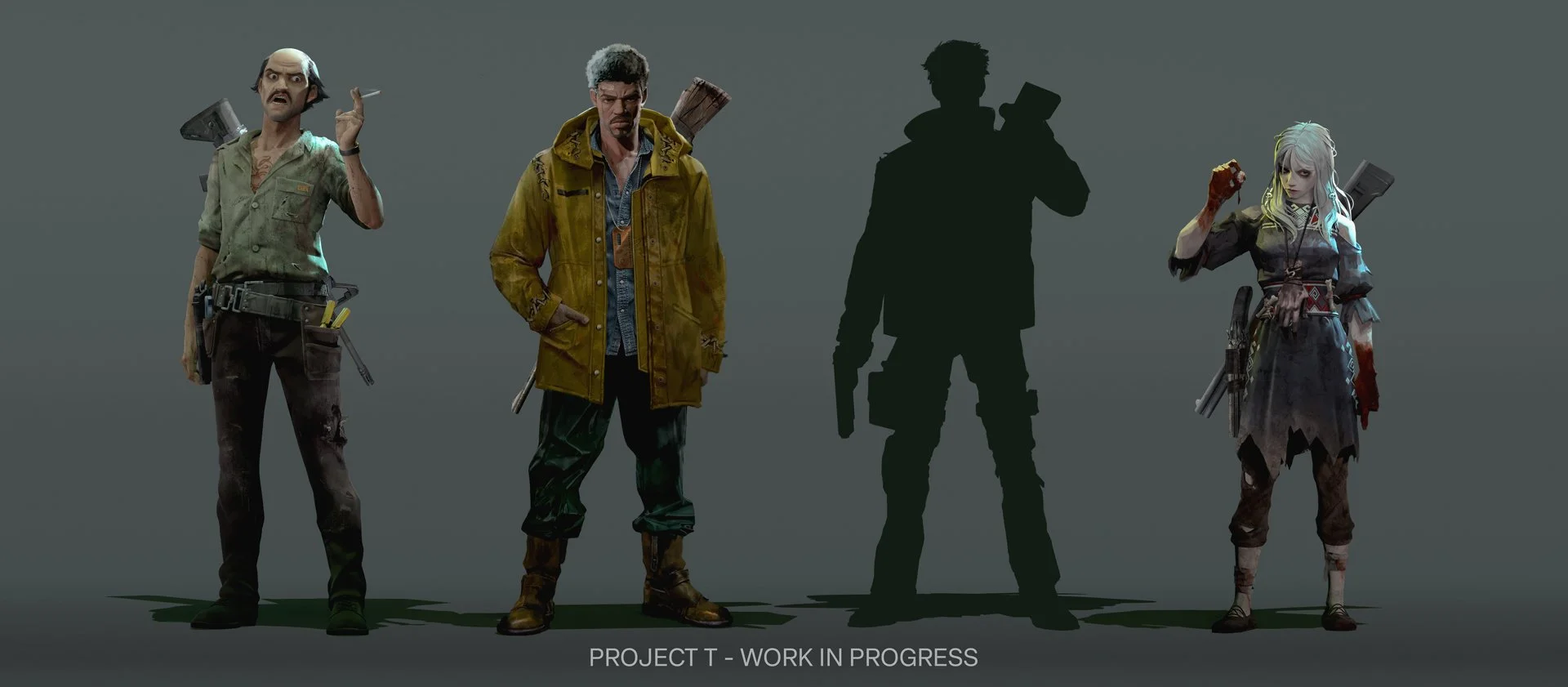
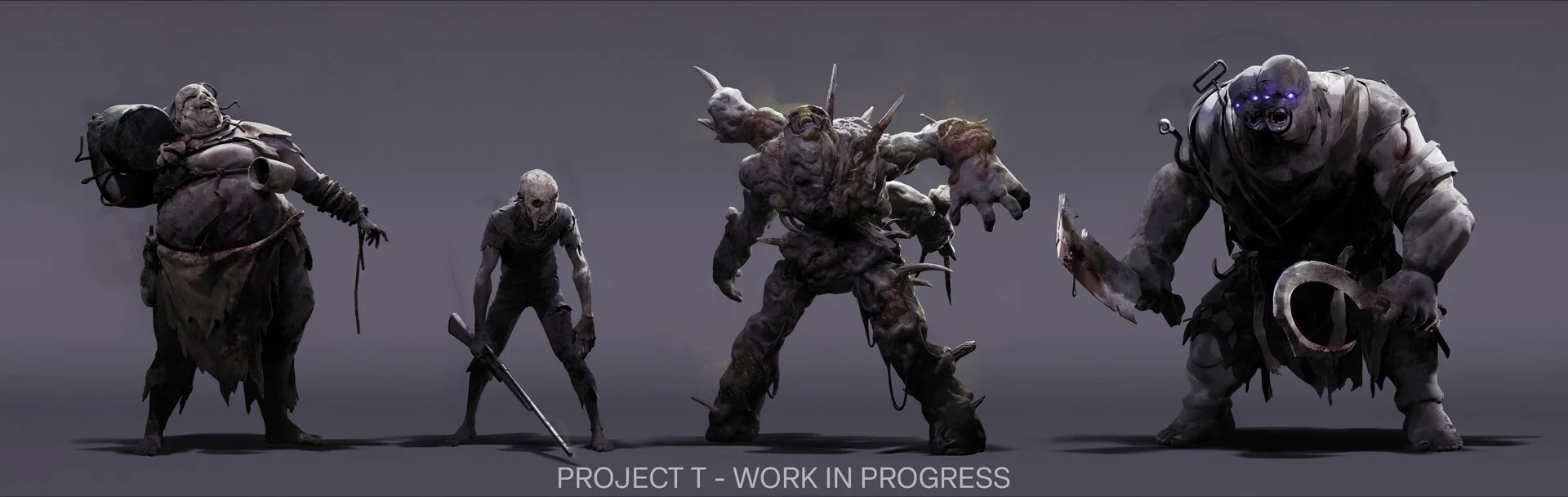
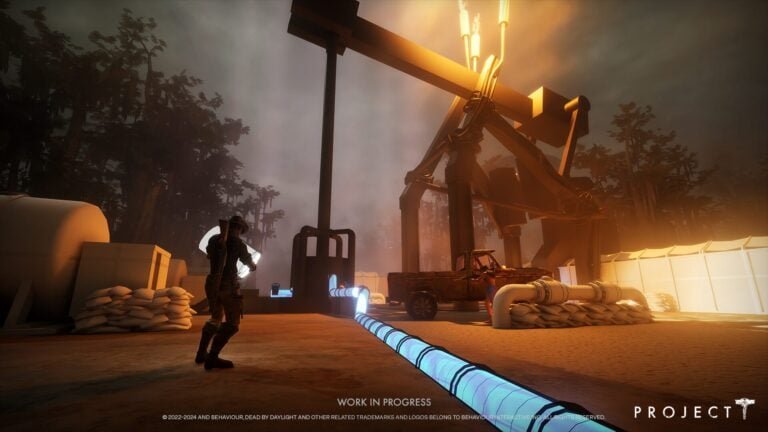
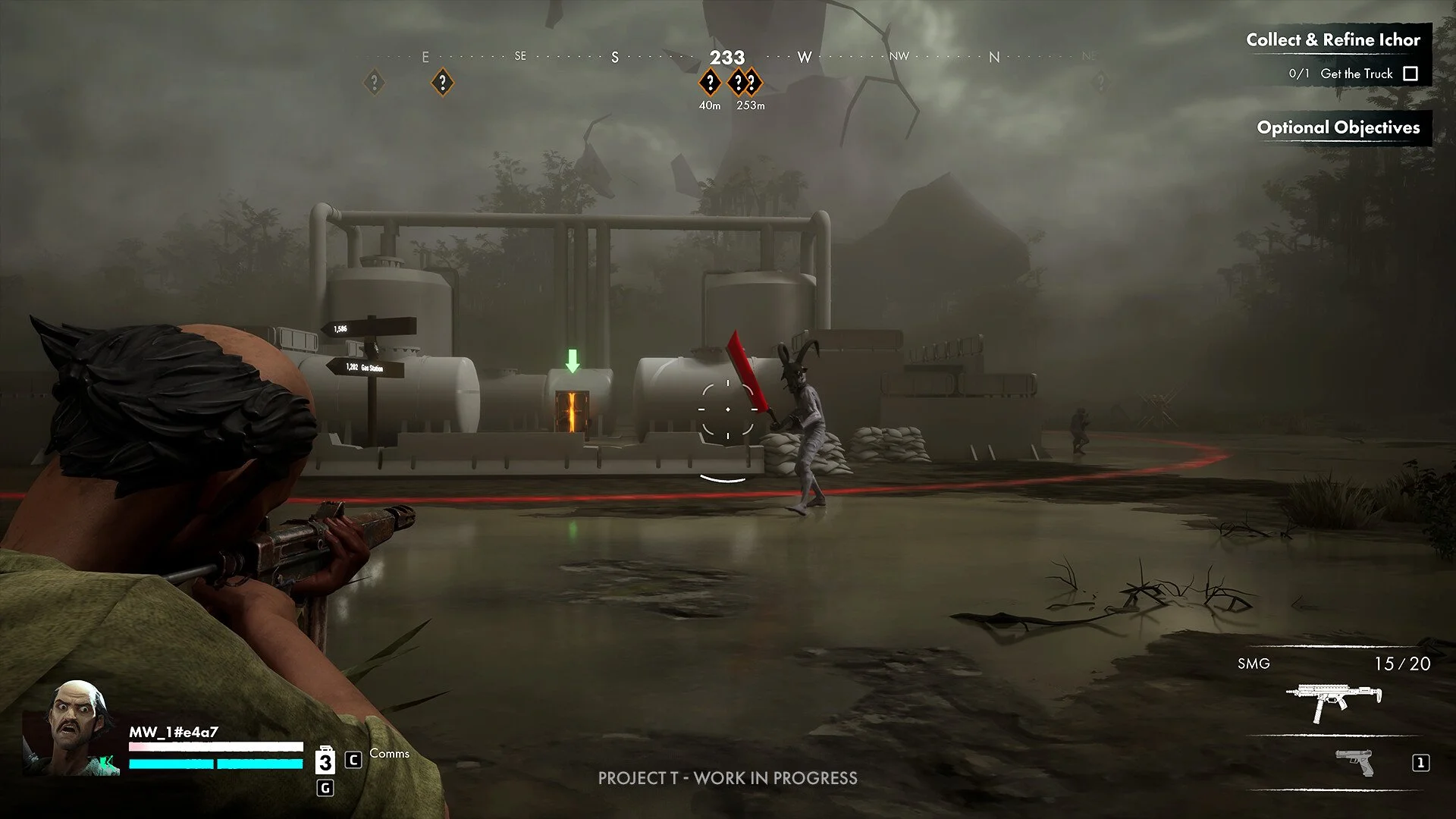
Project T was a cooperative PvE shooter set in the world of Dead by Daylight, built around squad survival, objective play, vehicle exploration, and occult combat. Players entered the Backwater as a four-person group of Trespassers, selected weapons and Talismans that granted unique supernatural abilities, repaired and operated a truck to move through the world, completed mission objectives, and fought against the Thrall as enemy pressure escalated across each run.
The project’s core design challenge was to translate the tension and horror identity of Dead by Daylight into a readable, replay-able cooperative shooter. That meant bringing a wide set of action systems into a cohesive experience that could support both player expectations around both the IP and an action game.
I joined the team during a critical realignment period to help clarify the gameplay direction and strengthen design execution. I led a cross-discipline group of systems, level, and technical designers working in Unreal Engine. My role centered on improving combat readability, tightening the relationship between level design, objectives and encounters and driving the product toward stronger external playtest results around clarity, fun, and overall combat quality.
Rebuilding Focus
When I joined Project T, the game had a strong collection of systems, but they were not yet consistently reinforcing the same player experience. Weapons, abilities, level design, traversal, objectives, and encounters each had value, but the product needed clearer alignment around what players were meant to understand, pursue, and feel moment to moment.
I worked with the Creative Director and discipline leads to reframe the game around a more focused core loop: enter the Backwater, complete objectives to gain strength, manage escalating pressure, make meaningful tradeoffs, and extract after pushing for better rewards. That loop became a practical design razor for evaluating features by how well they improved the experience on stick, rather than how well they worked in isolation.
This realignment gave the design team clearer language for decision-making and helped shift development away from separate feature tracks toward a more holistic player journey. The result was a stronger gameplay direction, tighter design focus, and a better foundation for production.
Holistic Game Design
A major part of my work was improving how Project T played moment to moment, with design direction across 3C feel, weapon behavior, combat pacing, roguelike upgrades, and level design pillars.
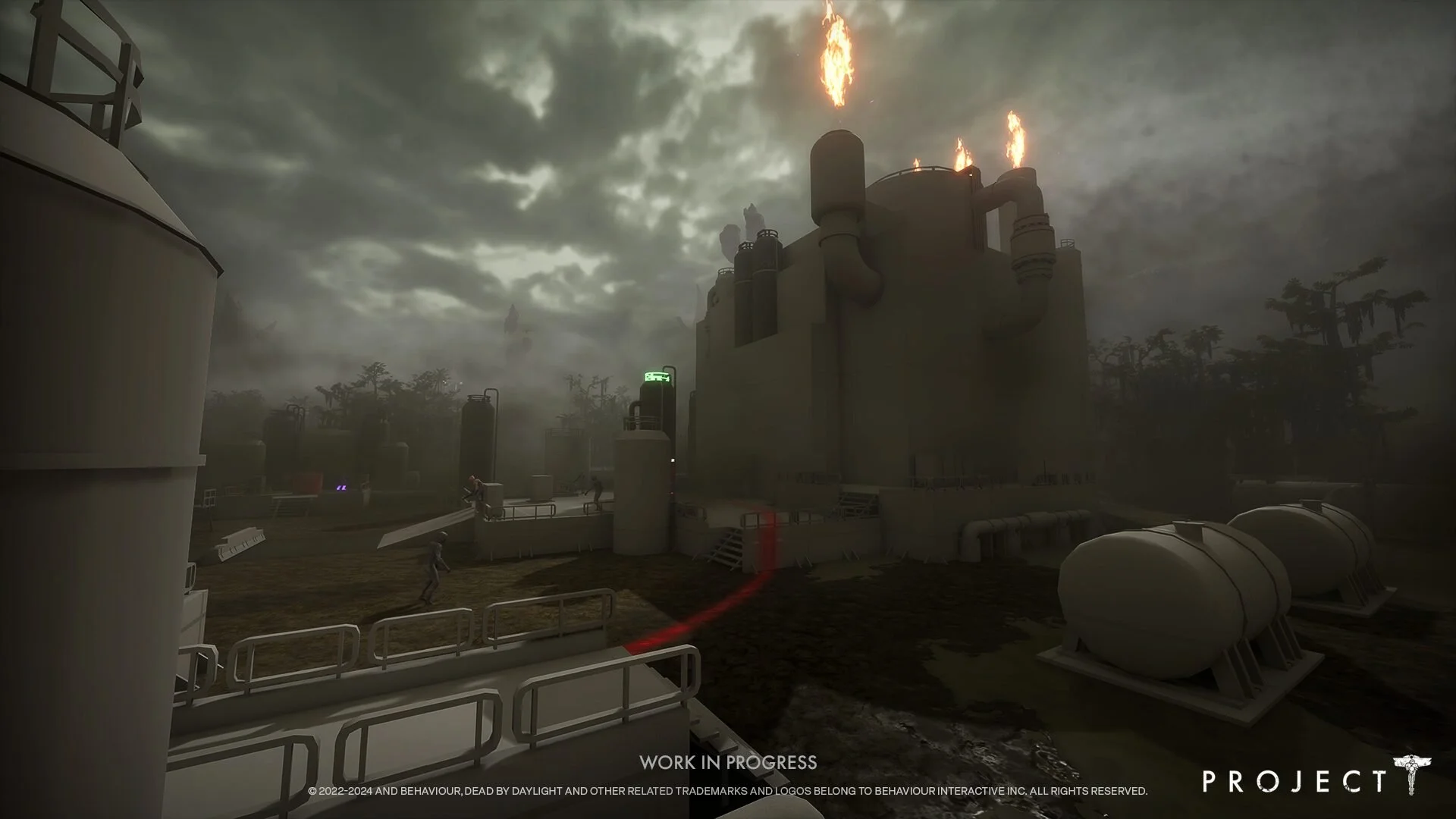
The focus was not just to improve each system individually, but to make them reinforce the same cooperative combat experience. For weapons and abilities, that meant clarifying roles, strengthening player fantasy, and improving combat readability. For objectives and session progression, it meant leaning into the roguelike structure to give players stronger reasons to engage with content, buildcraft, and risk-reward decisions within each run. For level design, we clarified pillars around traversal language, POI construction, encounter structure, and RNG distribution.
I also helped bring level design and combat design into closer alignment. Spaces needed to support the suite of enemies we had built for the game and the player verbs that were already in flight which meant convincing my level designers to treat geo as a core part of the combat experience.
This work created a clearer relationship between systems and how they were actually working together from a player facing perspective and help align them faster to the cooperative action experience we were looking for.
Project T was ultimately impacted by the studio closure of midwinter entertainment, but the work represented a meaningful improvement in product quality, team focus, and player response. It was a strong example of my approach as a design leader: find the fun in the player experience, create the design language to support it, align the team around that language, and use playtesting to drive clear, measurable iteration.
Quality Through Iteration
Project T leveraged external testing to validate whether the game was becoming clearer, more fun, and more readable to players. I helped turn that feedback into focused design priorities across communication, combat clarity, objective readability, weapon feel, squad cohesion, and exploration.
Many of the issues players surfaced were systemic rather than isolated individual systems. To address these issues I established a clearer cross-discipline roadmap that connected player-facing problems to design goals and production priorities. This helped the team focus efforts around the highest-impact changes and better understand how individual design work connected to the broader player experience.
Across my tenure, external testing scores improved by more than 30%, reaching an 85% satisfaction rating. More importantly, feedback showed meaningful gains in the areas we were targeting: clarity, fun, combat quality, and overall product direction.