Mission 13: Genesis
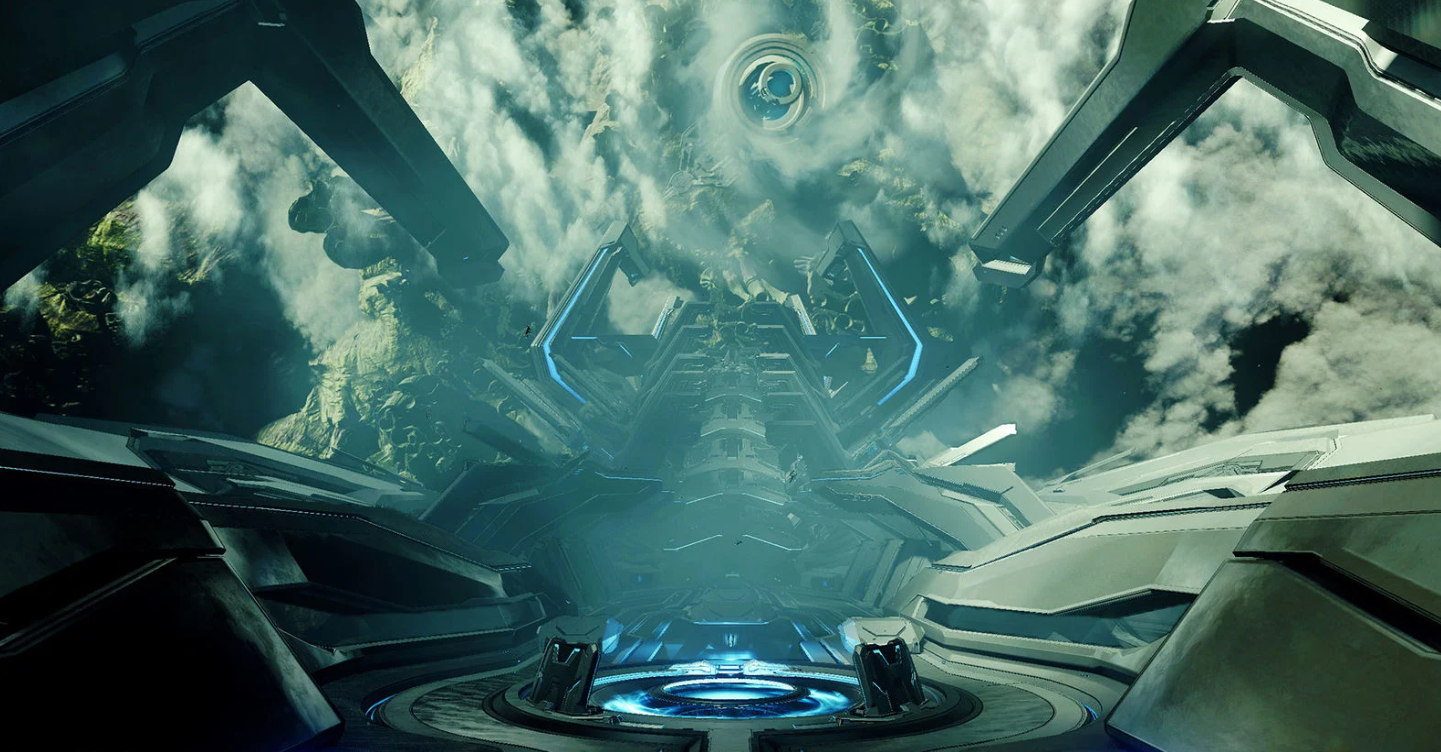
Genesis pushes Fireteam Osiris through one of Halo 5’s most epic set pieces experiences, from escaping a collapsing Guardian to an explosive tank run across the surface of Genesis. My work as a mission designer focused on creating a high-octane set piece, large scale vehicle sandbox encounters, introducing a quirky new character and ultimately building toward an Osiris and Blue Team face to face.
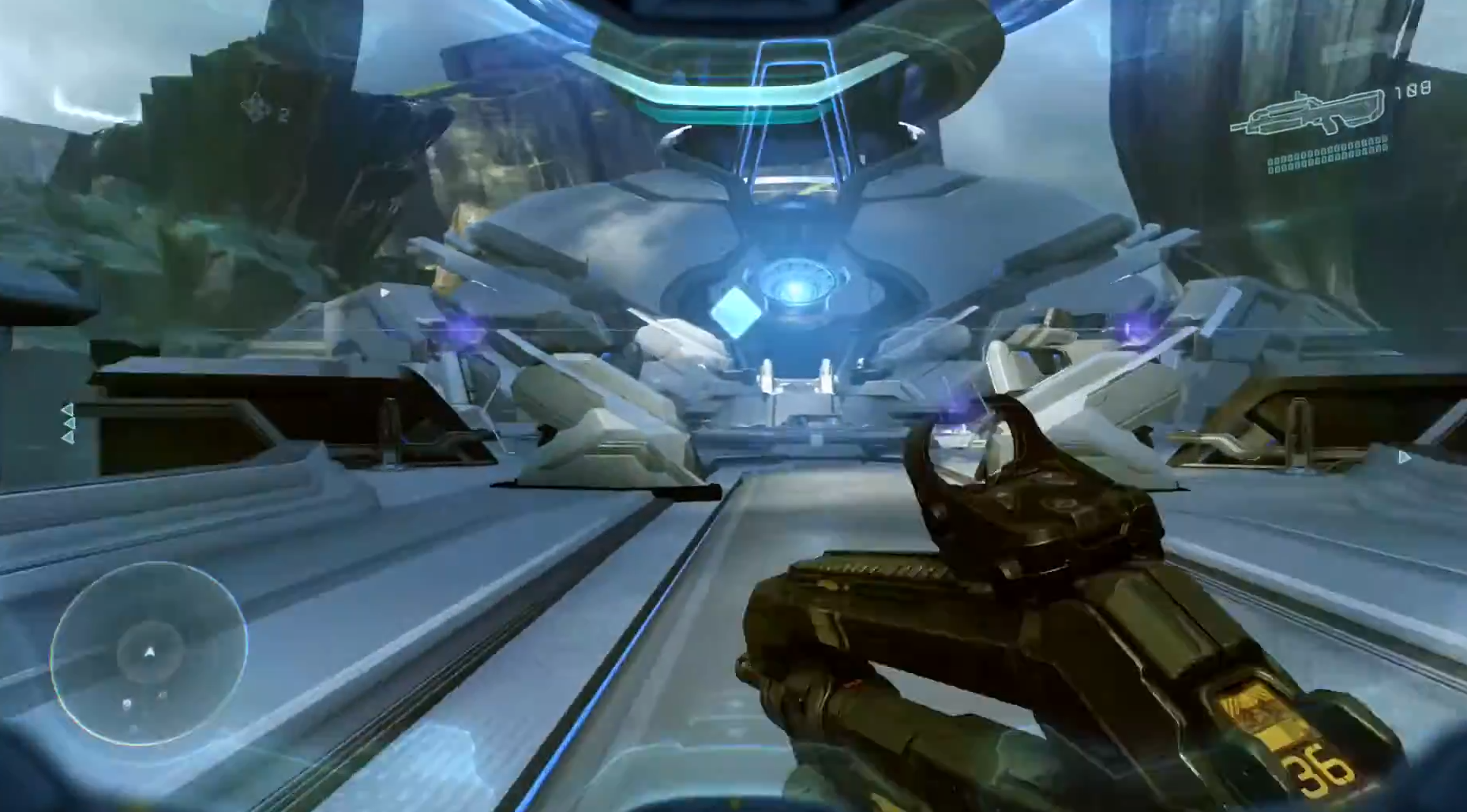
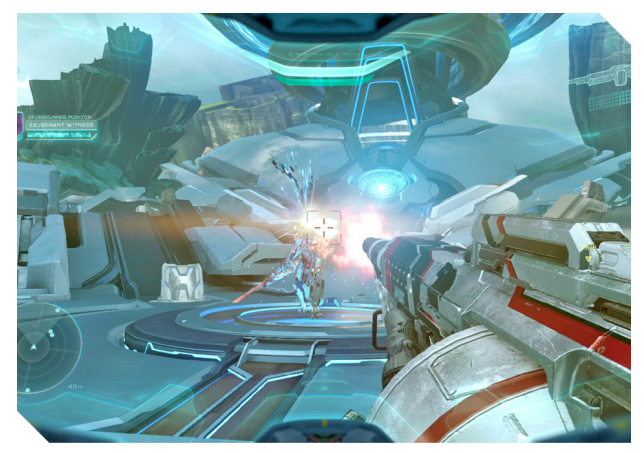
The mission begins with Fireteam Osiris escaping down the surface of a Guardian as it shifts beneath their feet. After surviving the descent, the player makes contact with Exuberant Witness and pushes toward the Gateway in pursuit of Master Chief.
Structurally, the mission moves through three distinct gameplay experiences: a perspective-shifting traversal set piece, a Scorpion tank run, and a large-scale Promethean arena battle. This creates a clear escalation curve, moving from momentum and survival, to pure player empowerment, to a demanding final infantry encounter built around power weapon showcases.
The mission’s strength is in its content variety and escalation of player empowerment. Each section varies the combat language while reinforcing the Spartan fantasy of doing the impossible.
Overview
Encounter Highlights
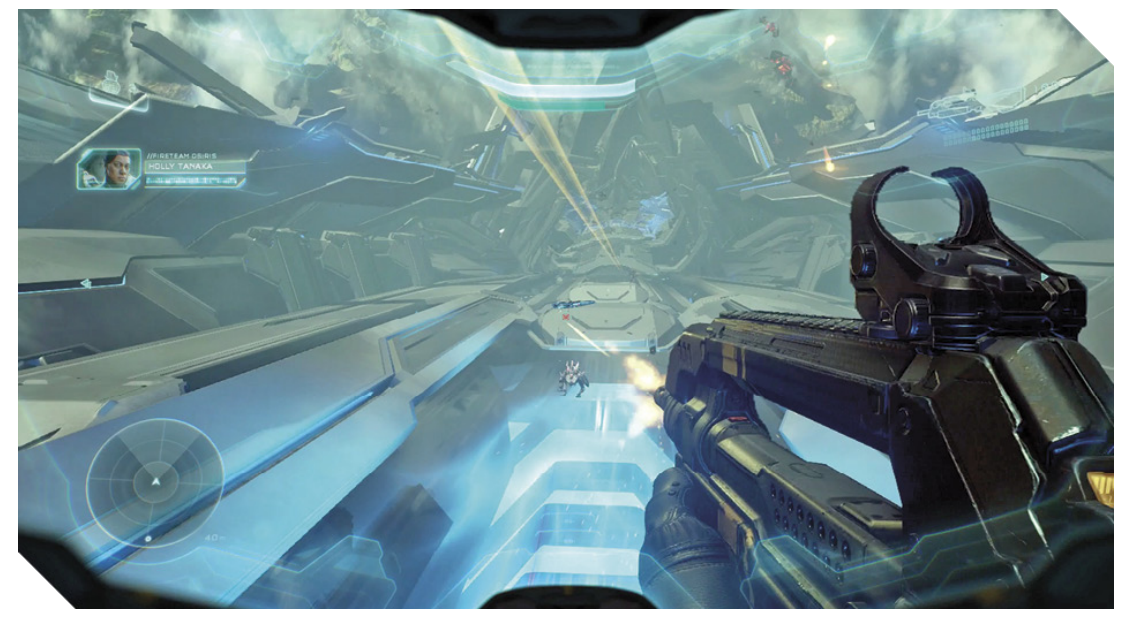
The Guardian escape was designed as a gravity-defying traversal sequence that immediately communicates instability, urgency, and scale. The player is given a completely new perspective on the world while sprinting down the shifting surface of a massive Guardian as Genesis pulls them toward the planet below.
The design goal was to create a memorable gameplay spectacle that players had not seen in Halo before. By making traversal the primary source of tension, we could keep combat friction intentionally light allowing players to stay focused on the cinematic chaos unfolding around them.
This was also a significant technical achievement for the team. I worked closely with animation and engineering to create a dynamic, animating encounter space where enemies could appear to move and fight on the shifting surface while preserving the fantasy of running down the side of a skyscraper. We achieved this through advances in navmesh generation, localized physics behavior, tight iteration between environment animation and gameplay design, and mission-specific scripting that sold the altered gravity scenario without breaking player control.
As an opening beat, the Guardian escape quickly establishes the mission’s tone. It delivers fully playable cinematic spectacle through motion and perspective to create an experience that felt distinct within the campaign.
Guardian Escape
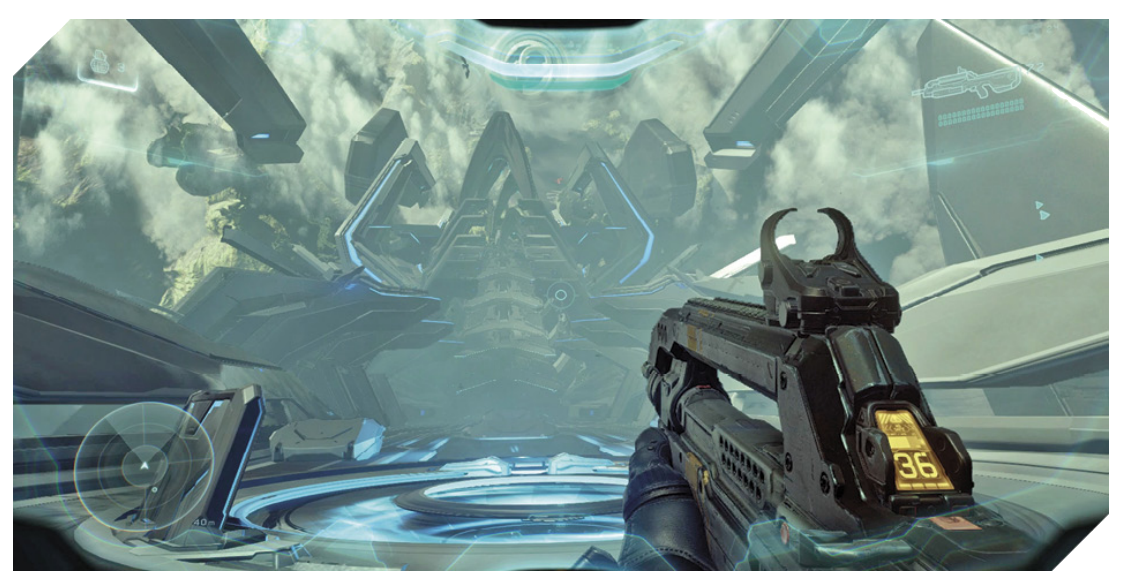
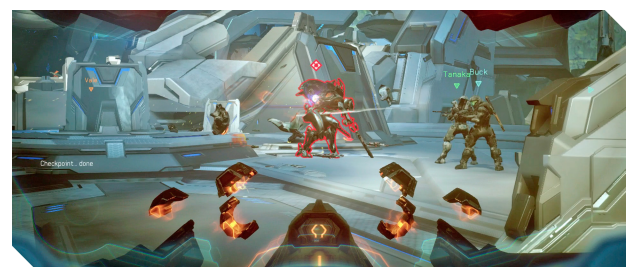
The tank run is a traditional Halo tentpole moment built around player empowerment and sandbox vehicle combat.
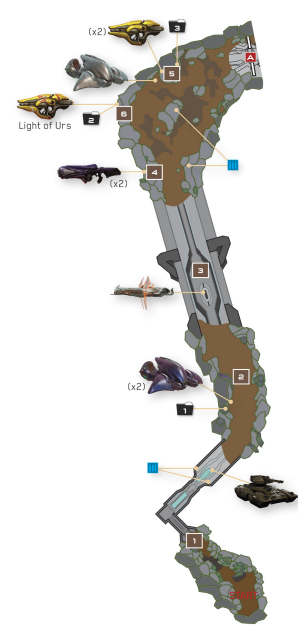
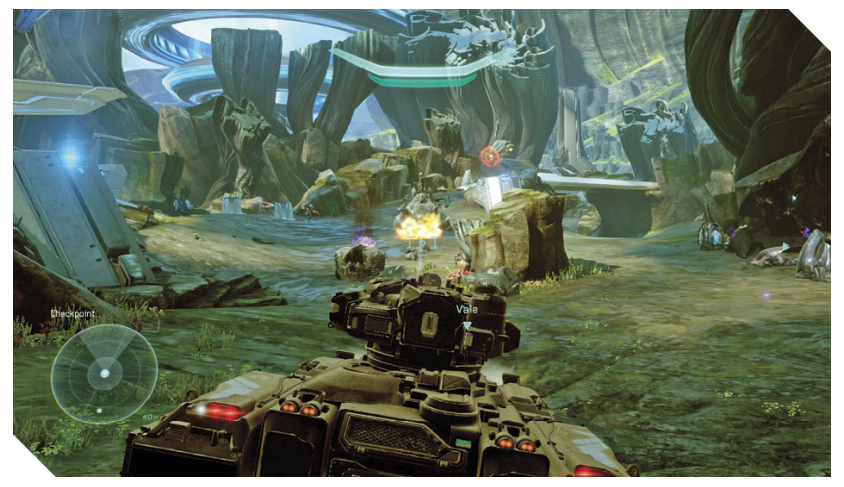
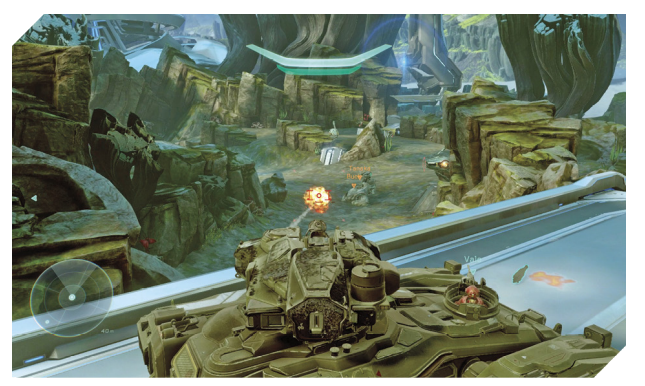
The design goal was to give players a strong sense of power while still preserving friction, readability, and meaningful choice. The encounter uses a wide-linear structure, with clear roads, strong landmarks, gated progression, and readable combat fronts to keep players oriented while steadily escalating pressure through priority targets and targets of opportunity.
The Scorpion provides range, impact, and dominance, but power-vehicle encounters need careful pacing to avoid target fatigue. A key part of the design was balancing smaller enemies that sell scale, satisfying targets that “pop,” and heavier threats that create real friction. Ghosts and Phantoms helped deliver combat satisfaction while turrets and Wraiths, and heavier infantry kept the encounter tactically engaging.
Supporting vehicles and placed power weapons gave co-op players and teammates additional ways to contribute, allowing the encounter to flex between pure tank dominance and mixed vehicle combat. The strength of the sequence is that it delivers a clear power fantasy and gives players a pressure release by letting them flip the script on enemies that are normally much more challenging.
Tank Run
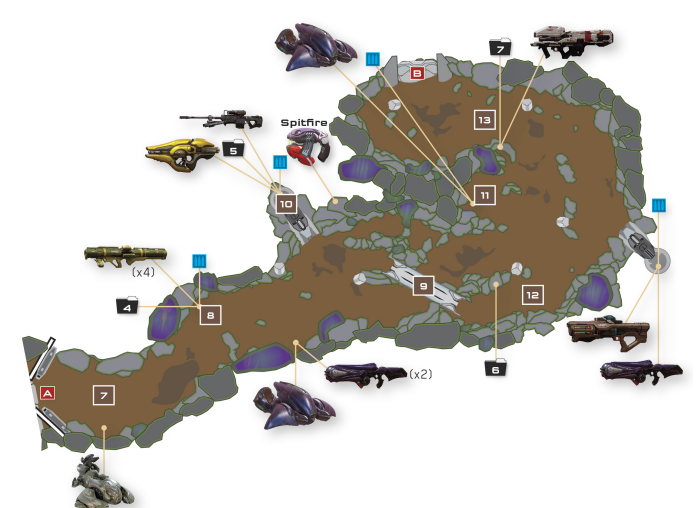
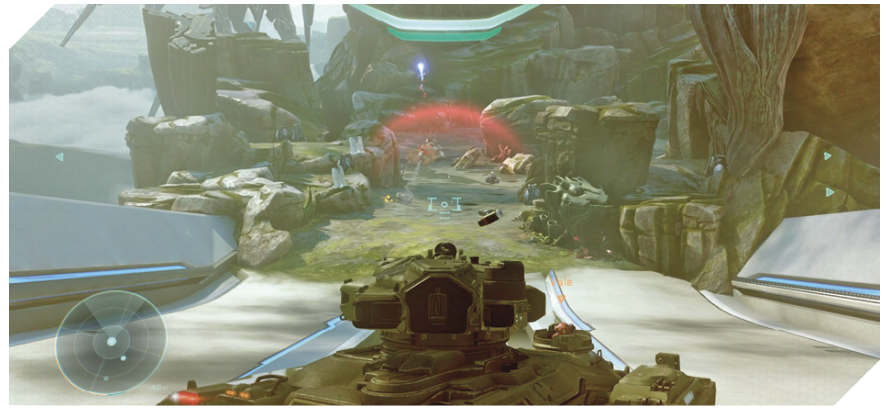
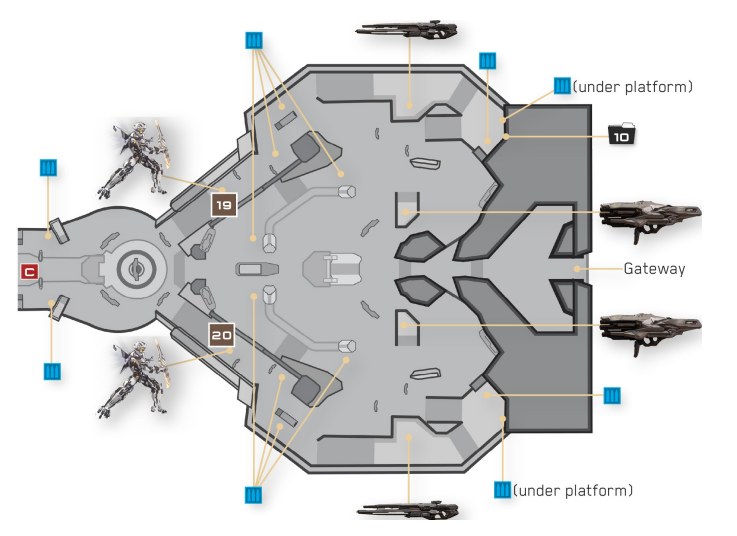
The final encounter of the mission shifts from the broad exteriors into a tighter Forerunner arena, creating a deliberate change in pacing, intensity, and challenge. After pushing through larger combat spaces, the player enters a more focused encounter where Promethean Knights become the mission’s heaviest direct combat test.
The goal of the encounter was to deliver a clean escalation into a high-threat enemy showcase while reinforcing the player’s core combat loop: observe the threat, identify opportunities, and act on tactical choices. The player gets a clear introduction to the Knight before the fight fully opens, allowing them to understand its scale, power, and vulnerability windows. From there, the encounter asks players to manage armor stripping, core targeting, and ammo pressure while pushing into the arena and engaging the Knights and their supporting units.
The fight works because it narrows the player’s focus after the larger exterior battles and brings the mission back to grounded Halo combat. Instead of broad battlefield navigation, the emphasis becomes precision, resource management, target prioritization, and coordinated team support.
Gateway